
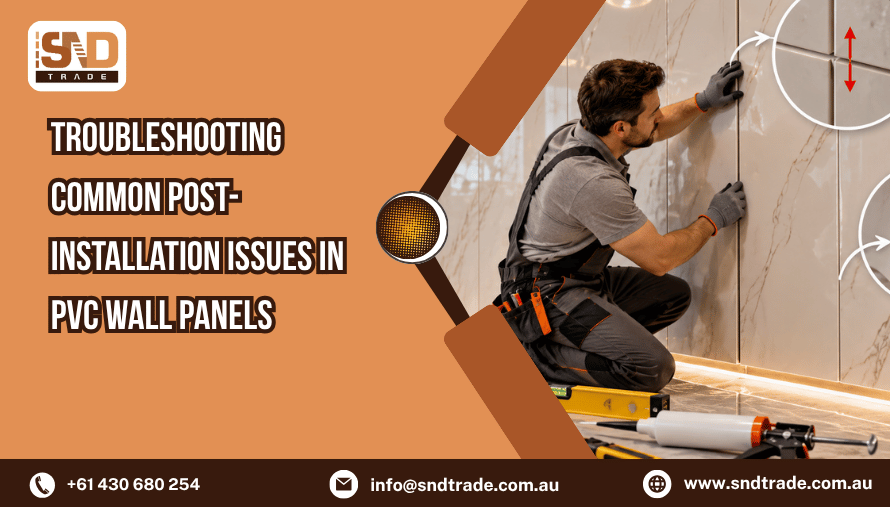
PVC wall panels give you a clean, modern finish without much fuss to maintain. But even good-quality panels can act up after installation if the wall, adhesive, joints, or room conditions weren’t quite right.
If you’ve gone with PVC Internal Cladding Melbourne, knowing these common issues ahead of time can save you a costly repair down the track. The good part? Most problems show up early, and fixing them isn’t as hard as it sounds.
What Are the Most Common PVC Wall Panel Problems?
Here’s what tends to go wrong most often:
- Panels lifting off the wall
- Gaps between panels
- Bubbling or uneven spots
- Cracked panels
- Discolouration or staining
- Mould at the joints
- Warping from temperature swings
Every one of these has a specific reason behind it. Once you find the cause, the fix is usually straightforward.
PVC Internal Cladding Melbourne: How to Fix Panels That Lift
A panel lifting or peeling away at the edges is one of the first things people notice.
It usually comes down to the wall being dusty, damp, or slightly uneven before the panel went up. Skimping on adhesive, or using the wrong type, doesn’t help either.
How to troubleshoot it
Check if it’s the whole panel or just one edge that’s loose. If the panel itself is fine, you can often pull it off carefully, clean the wall properly, and reglue it with a proper adhesive.
Don’t just put more glue behind the loose bit; without checking what’s going on underneath, it might hold for a while, then fail again.
If more than one panel is lifting, it’s worth looking at how the whole job was installed rather than patching each spot separately.
How to Deal With Gaps Between PVC Panels
Gaps show up when panels weren’t lined up quite right or when the material has shifted a bit with the temperature.
PVC expands and contracts as it heats up and cools down. In Australian homes, where days can swing from cold mornings to warm afternoons, this matters more than people expect.
Check these areas
- Panel alignment
- Joint trims
- Wall temperature
- Expansion gap
- Panels forced too tight
For a small, cosmetic gap, a matching trim or a bit of sealant usually tidies it up nicely. If the gaps keep coming back or get bigger, the panels probably need repositioning.
What Causes Bubbles or Uneven Areas?
Bubbles or raised patches can make a fresh wall look messy fast.
The usual causes are uneven application of the adhesive or an unlevel surface in the first place. Dust, moisture, or dirt caught beneath the panel will also prevent proper adhesion.
If you spot a bubble soon after installation, resist the urge to press it down repeatedly or poke a hole in it before figuring out what’s causing it.
For one small section, removing and refitting the panel often does the trick. If it’s happening across several panels, it’s time to check the wall prep and adhesive method used.
How to Repair Cracked or Damaged PVC Panels
PVC holds up well, but it’s not indestructible. A heavy knock, a bad cut, or too much pressure can crack it.
A minor surface scratch might be fixable depending on the panel style. A deep crack or a broken section, though, is usually easier to just replace.
When swapping out a panel, hang onto a spare piece from the original batch if you can. Matching colour and texture later gets tricky, especially if that exact product isn’t sold anymore.
Preventing Mould Around Panel Joints
PVC itself doesn’t soak up moisture, but water can still sneak in behind panels or through poorly sealed joints.
Bathrooms and laundries need extra attention here.
Watch for:
- Dark marks at joints
- Ongoing dampness
- Trims coming loose
- Sealant failing
- Water behind panels
Wipe off surface mould using the care instructions for your panels, but don’t stop there if moisture is getting in behind the cladding; that’s the real problem to sort out.
Common Mistakes to Avoid After Installation
A few “quick fixes” can actually leave you worse off.
1. Wrong cleaning products
Harsh chemicals or scrubby tools can scratch or dull the panel surface. Stick to what the manufacturer recommends.
2. Ignoring moisture
Don’t just reglue a loose panel in a wet area without checking for water damage first.
3. Blocking expansion
PVC needs a little breathing room. Forcing every joint tight together sets you up for warping later.
4. Fixing symptoms, not causes
If the same issue keeps popping up across panels, replacing bits one by one just delays the bigger fix.
Practical Tips for Long-Lasting PVC Wall Panels
Small maintenance can make all the difference:
- Regular joint checking
- Ensuring proper ventilation of wet areas
- Using mild cleaners
- Addressing any loose edges at once
- Not placing heavy loads on the panel
- Having spares for replacement
- Following instructions from the manufacturer
In the case of PVC Internal Cladding Melbourne projects, good preparation of walls and installation matter greatly to the performance of the panels.
FAQ About PVC Internal Cladding Melbourne
- Why are my PVC wall panels coming away from the wall?
Probably bad wall preparation, wrong glue, moisture, or a rough surface underneath. - Can small gaps between PVC panels be fixed?
Yes, a trim or sealant handles small gaps well. Bigger or repeat gaps might mean the panels need repositioning. - Can PVC wall panels go over a damp wall?
Sort out the dampness first. Covering it up just invites mould and adhesion problems later. - How do I clean PVC wall panels properly?
A soft cloth with a mild cleaner does the job. Skip abrasive scrubbers or strong chemicals unless the manufacturer says it’s fine. - Is PVC Internal Cladding Melbourne good for wet areas?
Generally yes, but the whole setup, like joints, trims, seals, and the wall behind it, needs to be done properly for the space.
Conclusion
Most issues with PVC Internal Cladding Melbourne installations come down to a handful of things: wall prep, adhesive, joints, moisture, and how the panels handle temperature changes. Catching small problems early beats dealing with a bigger repair later.
If you’re planning a PVC cladding project and want it done right the first time, get in touch with SND Trade for advice on panels and installation suited to your space.